As a graphic designer, I spend a lot of time helping brands communicate visually. My work involves colours, typography, layouts, packaging, social media creatives, brochures, website graphics, and other marketing materials.
At some point, however, I asked myself a simple question:
Am I presenting my own work and professional identity as thoughtfully as I present the brands I work on?
I had a LinkedIn profile and a Behance portfolio. Both platforms helped me share my work and connect with people. Still, I felt that something was missing.
My work was available online, but my complete professional story was not.
I wanted one professional space where people could understand who I am, what kind of design work I do, how my journey began, and what I can contribute as a visualiser and graphic designer.
That was when I decided to build my personal brand website.
How My Journey as a Graphic Designer Began
My interest in design developed while completing my Bachelor of Fine Arts in Visualisation at Bharati Vidyapeeth.
During my education, I learned that design is not only about creating something attractive. A good design must communicate clearly, connect with the intended audience, and support a meaningful purpose.
My professional journey gave me opportunities to apply these lessons across different projects and work environments.
Learning Through My First Design Internship
During my internship with Team Anish Sahasrabudhe, I worked on presentations, flyers, brochures, posters, billboards,
news cover designs, and social media creatives.
I also gained experience in social media planning and coordinating work according to project requirements and deadlines.
This experience helped me understand how design requirements change across formats, platforms, and audiences.
Designing for Food and Consumer Brands
Later, while working with Bluchisel Business Solutions, I created visual content for food brands. My responsibilities
included packaging design, social media creatives, logos, brochures, and banners.
Designing for food brands taught me to think carefully about consumer attention, product identity, and the relationship
between packaging and purchase decisions.
It also helped me improve my ability to manage multiple projects while maintaining quality and visual consistency.
Developing Brand Identities as a Freelance Designer
My freelance work with Fable Digital Media gave me further exposure to branding, packaging, and social media design.
One project that stands out in my journey was developing the visual identity of the “Tutu Me” snack brand. The work included logo creation, packaging design, branding, and supporting visual elements.
Working on a brand from its early stage was a valuable experience. It helped me understand how multiple design elements must work together to create one consistent and recognisable identity.
Why LinkedIn and Behance Were Not Enough for Me
LinkedIn is valuable for professional networking, while Behance is a useful platform for presenting creative work. I continue to use and value both platforms.
However, these platforms have predefined layouts and structures. They decide how profiles, projects, and information are displayed.
As a designer, I wanted greater control over how people experienced my work.
I did not want visitors to see only a collection of finished designs. I wanted them to understand the thinking, process, and journey behind my work.
A personal brand website gave me the freedom to decide:
• How I wanted to introduce myself
• Which projects I wanted to highlight
• How my portfolio should be organised
• Which skills and experiences needed greater visibility
• How my visual identity should be presented
• How visitors could contact me
My LinkedIn profile communicates my experience. Behance displays selected creative work. My personal website connects
these elements and presents them as one complete professional story.
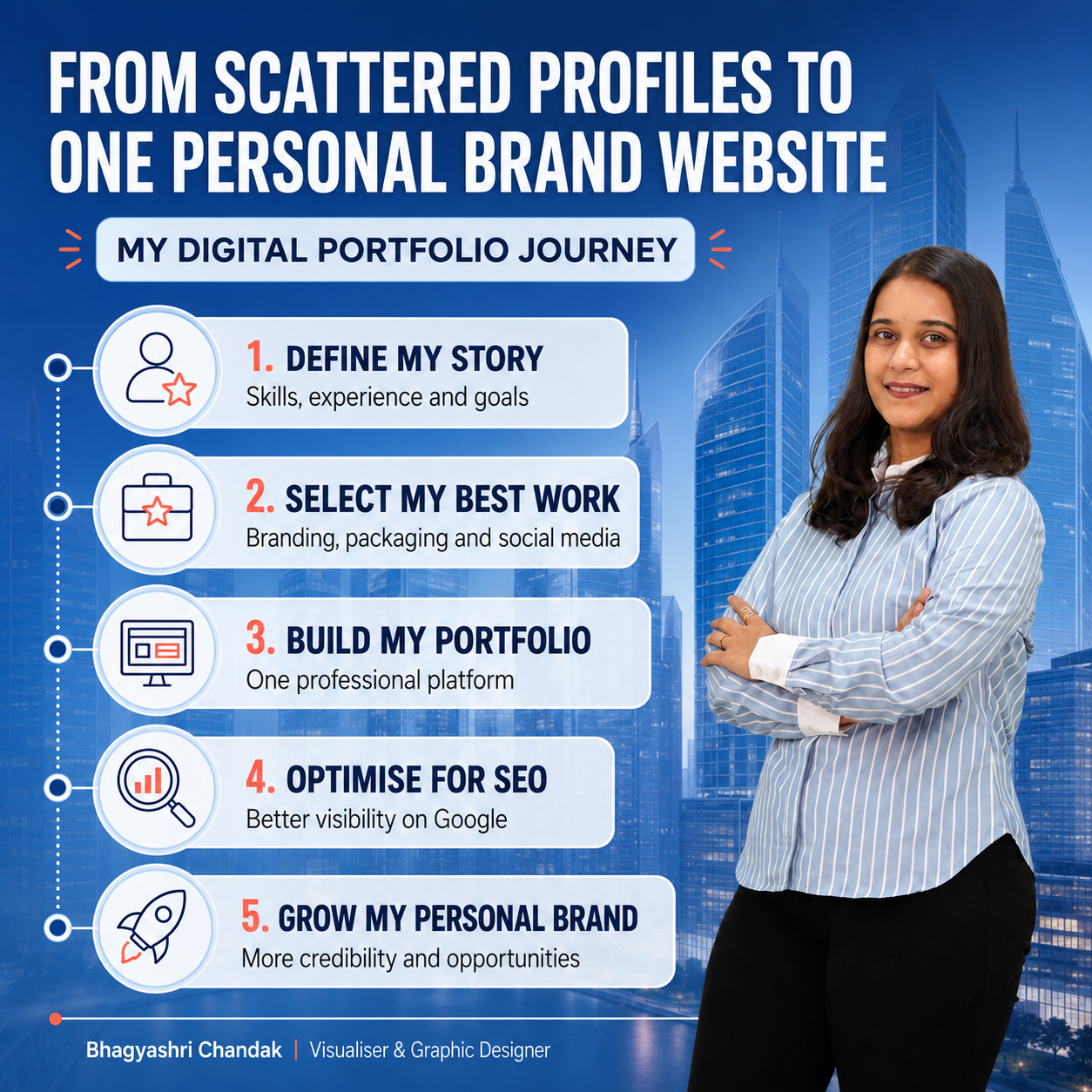
Bhagyashri Chandak Digital Portfolio Journey
My Experience with CAREERDON Technologies
My association with CAREERDON was already meaningful before the development of my portfolio website.
I worked as a graphic designer with CAREERDON Technologies from November 2024 to June 2026. During this period, I created website graphics, brochures, icons, marketing materials, YouTube thumbnails, and video content for the brand.
This experience gave me practical exposure to designing content related to career counselling, resume writing, psychometric assessment, AI career guidance, career growth, and professional branding.
Working on these projects helped me understand how visual communication influences professional credibility. Whethermthe audience is a student seeking career clarity or a professional planning a career transition, the design must make information clear, accessible, and trustworthy.
Why I Chose CAREERDON for My Portfolio Website
When I decided to build my portfolio website, I wanted it to bring together design, content, professional positioning, user experience, and online visibility.
Since I was familiar with CAREERDON’s approach to professional branding, I chose the team to design and develop my digital portfolio.
The process was not limited to placing my projects on a website. It began with understanding my experience, strengths,
work samples, and professional direction.
This helped transform my portfolio into a more complete representation of my journey as a visualiser and graphic designer.
Professionals interested in creating a similar online presence can explore CAREERDON’s digital portfolio development services.
What I Wanted My Portfolio Website to Communicate
Before building the website, I had to think carefully about what I wanted visitors to understand about me.
I wanted my portfolio to reflect that I am a creative and dedicated graphic designer with experience across:
• Brand identity design
• Logo design
• Packaging design
• Social media creatives
• Brochures and marketing materials
• Website graphics
• YouTube thumbnails
• Basic video editing
• Visual storytelling
I also wanted the website to communicate that I enjoy learning, collaborating, and adapting my creative approach.
Every brand has a different audience, personality, and communication goal. A designer cannot use the same approach for every project.
Listening carefully, understanding the requirement, and adapting the design are essential parts of my creative process.
My personal brand website needed to reflect this flexibility while maintaining a consistent visual identity.
How I Selected Projects for My Digital Portfolio
One of the most challenging parts of building my portfolio was deciding which projects to include.
As designers, we often feel connected to everything we create. However, including every piece of work can make a portfolio crowded and difficult to explore.
I had to review my projects more objectively.
Choosing Quality Over Quantity
I considered which designs represented my strongest skills, which projects demonstrated variety, and which work reflected the direction in which I wanted to grow.
For example:
• Packaging projects demonstrate my understanding of product identity and consumer attention.
• Social media creatives show how I adapt visual design to different marketing goals.
• Logos and branding materials demonstrate my ability to develop a visual language around a brand.
• Website graphics show how I balance creativity with clarity and user experience.
This selection process taught me that a good portfolio is not simply an archive of completed work.
It is a carefully selected presentation of professional capabilities.
Each featured project should contribute something meaningful to the overall story.
Showing the Process Behind the Design
A final design may look simple, but the process behind it can involve research, concept development, colour exploration, typography selection, layout decisions, feedback, and multiple revisions.
This is why I wanted my portfolio to show more than final images.
Wherever possible, a portfolio project should explain:
• What the requirement was
• Who the intended audience was
• What design approach was selected
• Why particular visual decisions were made
• Which tools or methods were used
• What the final outcome achieved
Showing this context helps visitors understand how the designer thinks.
A recruiter or client may appreciate the appearance of a design, but they also want to know whether the designer can
understand a brief, solve a communication problem, accept feedback, and deliver work within agreed timelines.
The process often communicates these capabilities more effectively than the final visual alone.
What Building a Website Taught Me About Personal Branding
Before this journey, I thought personal branding was primarily relevant to entrepreneurs, senior professionals, and public personalities.
Building my website changed that view.
Personal branding is equally valuable for designers, students, freelancers, job seekers, and early-career professionals.
It is not about constantly promoting yourself. It is about helping people understand your strengths, recognise your value, and remember your work.
My website encouraged me to consider questions I had not explored deeply before:
• What kind of designer am I becoming?
• What type of work do I enjoy most?
• Which skills make my profile valuable?
• How should I communicate my capabilities?
• What opportunities do I want to attract?
• What should someone remember after viewing my portfolio?
Answering these questions gave me greater clarity about my professional identity and future direction.
Why User Experience Matters in a Design Portfolio
As a designer, it can be tempting to make a portfolio highly artistic or experimental.
Creativity is important, but visitors should still be able to use the website comfortably.
A digital portfolio must be easy to explore. Visitors should quickly understand who the designer is, what kind of work is available, and how to get in touch.
They should not need to search for basic information.
Important Elements of My Portfolio Website
During the development of my website, I paid attention to:
• Clear navigation
• Readable typography
• Consistent colours
• Balanced layouts
• Well-organised projects
• Mobile responsiveness
• Simple contact options
• Clear calls to action
I learned that good user experience does not reduce creativity. It gives creativity a clearer purpose.
The design of a portfolio should support the work rather than compete with it.
What I Learned About SEO and Google Visibility
Building a website also introduced me to the importance of search engine optimisation.
Earlier, I mainly associated SEO with business websites. I later understood that it can also help individual professionals strengthen their online visibility.
When someone searches for a professional’s name or area of expertise, a well-structured personal website can help them
discover relevant and reliable information.
SEO Elements That Matter for a Portfolio Website
SEO involves several important elements, including:
• Page titles
• Heading structure
• Image filenames
• Image alt text
• Relevant keywords
• Website speed
• Mobile responsiveness
• Internal and external links
• Useful and original content
For a graphic designer, image optimisation is especially important.
Portfolio websites may contain several high-quality images. If those image files are too large or are not properly named and described, they can affect website speed, user experience, and search visibility.
I also learned that SEO is not about repeating keywords excessively. Content must sound natural and provide genuine value to visitors.
A personal brand website may take time to build visibility on Google. Regular updates, relevant content, technical optimisation, and credible contextual backlinks can support long-term growth.
How My Personal Brand Website Supports My Career
My personal brand website now gives me one professional destination that I can share with recruiters, clients, agencies, and collaborators.
Instead of sending several disconnected files and links, I can direct people to one platform where they can explore my
experience, portfolio, skills, and contact information.
The website supports my career by:
• Presenting my work in a structured format
• Strengthening my professional credibility
• Giving me greater control over my online identity
• Allowing me to add new projects as I grow
• Making my work accessible at any time
• Complementing my résumé, LinkedIn profile, and Behance portfolio
Most importantly, it gives me a professional platform that can continue growing with me.
My design style, skills, interests, and experience will continue to evolve. I can regularly update the website to reflect that progress.
My Advice to Other Graphic Designers
If you are a designer thinking about building a personal brand website, do not wait until you feel that your portfolio is perfect.
A portfolio will continue to evolve throughout your career.
Start by selecting a few projects that genuinely represent your capabilities. Explain the thinking behind your work and keep the website simple enough for visitors to navigate comfortably.
What to Prepare Before Building Your Website
Before beginning, collect the following:
• A short professional introduction
• An updated résumé
• Selected portfolio projects
• Clear project descriptions
• Skills and software knowledge
• Education and certifications
• LinkedIn and Behance links
• Professional contact information
• Testimonials or recommendations, where available
Think about the type of opportunities you want the website to support. This will help you decide which projects to feature and how to structure your content.
Most importantly, let the website sound and feel like you.
Trends can provide inspiration, but your portfolio should not become a copy of someone else’s style. Your work,
personality, and professional direction should remain visible.
Final Thoughts
Building my personal brand website has been an important step in my journey as a visualiser and graphic designer.
It helped me look at my work from a different perspective. I was no longer only creating designs for brands. I was also thinking carefully about how to communicate my own professional identity.
The process taught me that a portfolio website is not simply a digital gallery. It is a space where creativity, experience, credibility, and career direction come together.
LinkedIn helps me build professional connections. Behance helps me showcase creative projects. My personal website gives me ownership of my complete professional story.
I am still learning, experimenting, and growing as a designer. My website will continue to grow with me, one project and one experience at a time.
For me, that is the real value of building a personal brand website. It does not need to show that the journey is complete. It
needs to show where the journey began and where it may go next.

One Response
Wow such inspiring journey